

Blue Light Therapy, Explained
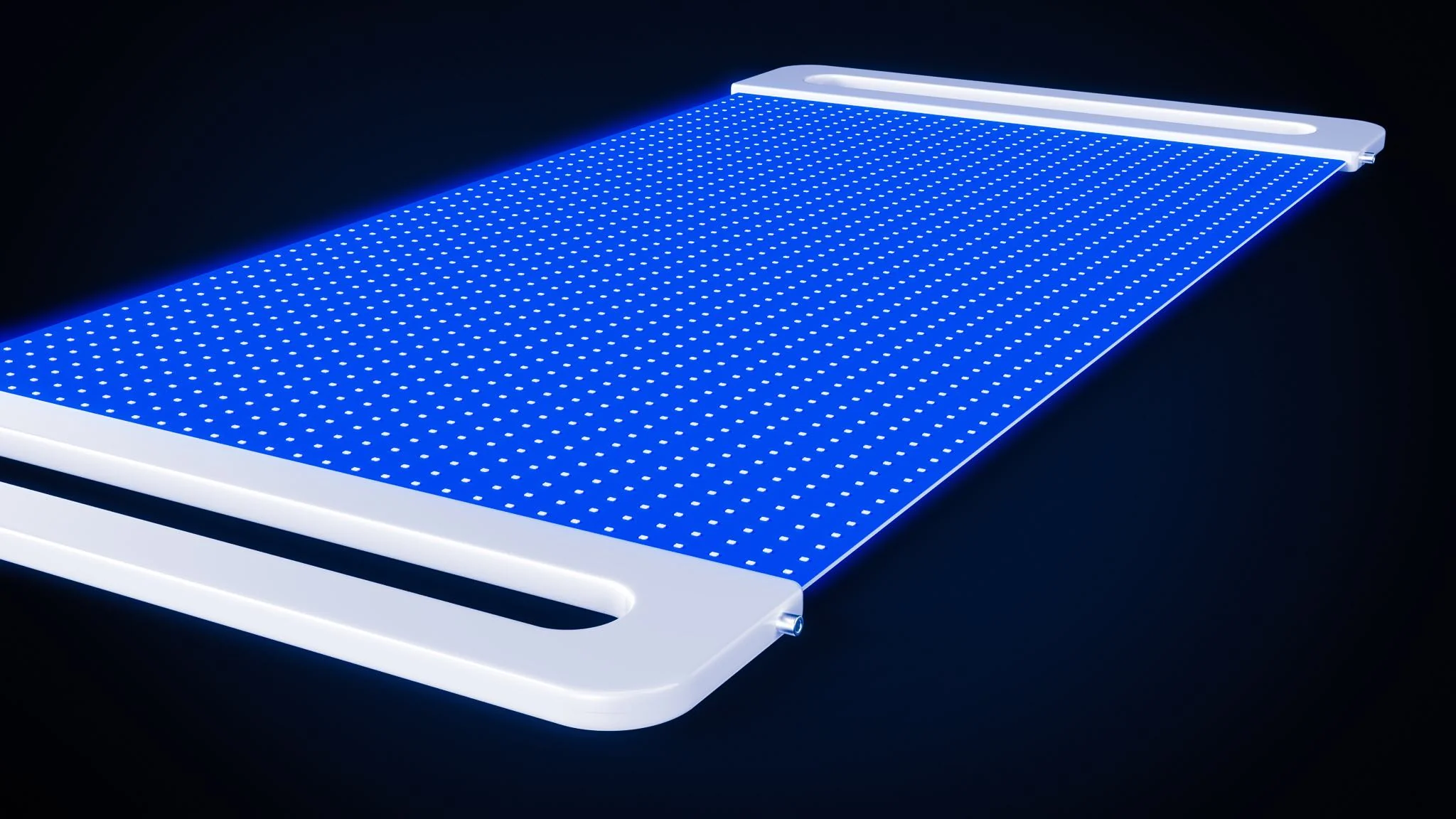
Lux Blue Light Therapy
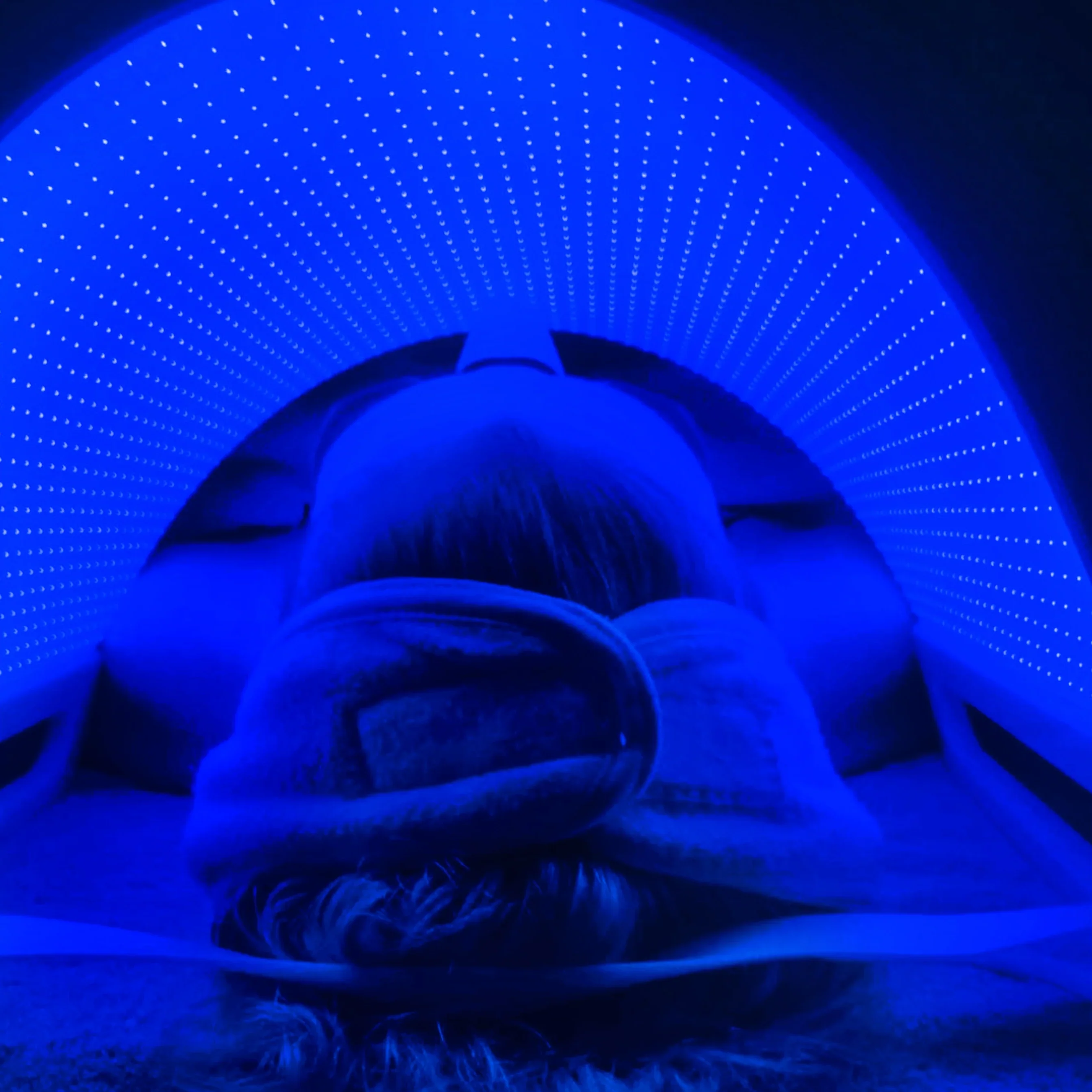
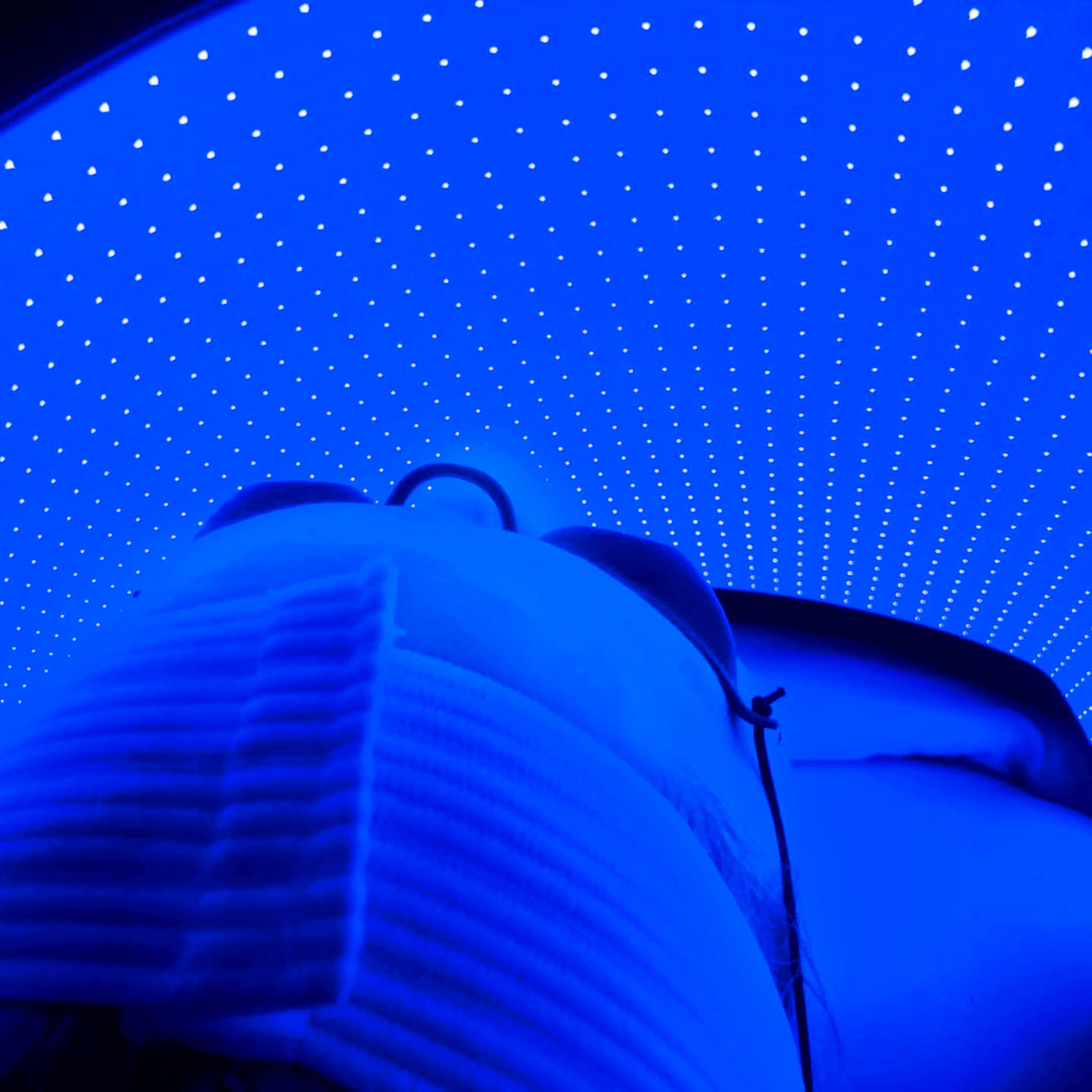
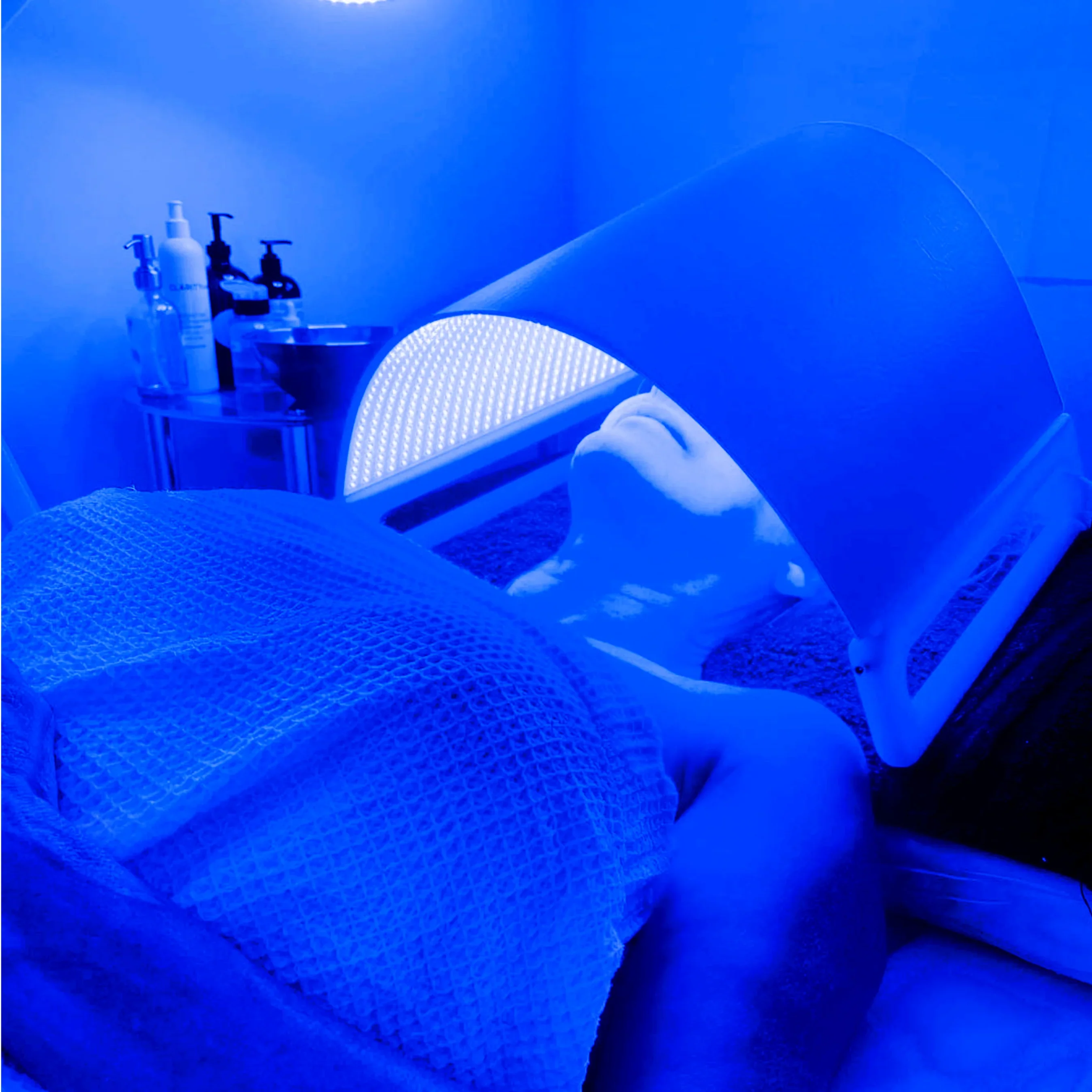
Most panels require 30-60 minutes of exposure time. Our acne fighting blue light therapy is the strongest panel on the market. It delivers 6K joules in only 5 minutes which means a full treatment can be added to any facial or back treatment.
Blue light therapy uses visible blue light — typically 415 nanometres — to kill the bacteria that cause acne. The bacteria produce molecules called porphyrins; blue light activates those molecules, which destroys the bacteria from the inside, calming breakouts and oil production without chemicals, needles or downtime. Here is exactly how it works, what it can and can't do, and how to get it — at home or professionally in San Diego.
What Does Blue Light Therapy Do?
Acne isn't caused by dirt — it's driven by a bacterium (Cutibacterium acnes) that lives in your pores and feeds on oil. That bacterium has a weakness: it produces light-sensitive molecules called porphyrins. When 415-nanometre blue light hits a porphyrin, the molecule releases a burst of reactive oxygen inside the bacterium itself — effectively making the bacteria destroy themselves. Your skin isn't harmed, because your skin cells don't carry those porphyrins.
That's why blue light shows results on inflammatory acne — the red, angry breakouts — and on the oiliness that feeds them. It is not a resurfacing treatment and it won't erase scars or wrinkles; its job is calming the biology that keeps new breakouts coming. Dermatology clinics have used exactly this wavelength for decades; the technology in home masks and professional panels is the same idea at very different strengths.
Why Choose Lux Blue Light Therapy?
Our state-of-the-art blue light panel offers unmatched benefits:
Fights Acne-Causing Bacteria: Kills bacteria with 415nm blue light, reducing breakouts and preventing new pimples for clearer skin.
Balances Oil Production: Regulates sebum to minimize clogged pores, leading to fewer breakouts and less oily skin.
Non-Invasive and Gentle: A natural, chemical-free option, perfect for sensitive skin with minimal side effects like mild redness or dryness.
Quick and Powerful: Delivers maximum energy in just 5 minutes—more isn’t better; exceeding this can reduce effectiveness, so we ensure optimal results every time.
Uniform Coverage: Features 2,000 blue lights for comprehensive, even energy distribution, targeting all areas simultaneously for faster results.
Blue vs. Red Light Therapy: Which Do You Need?
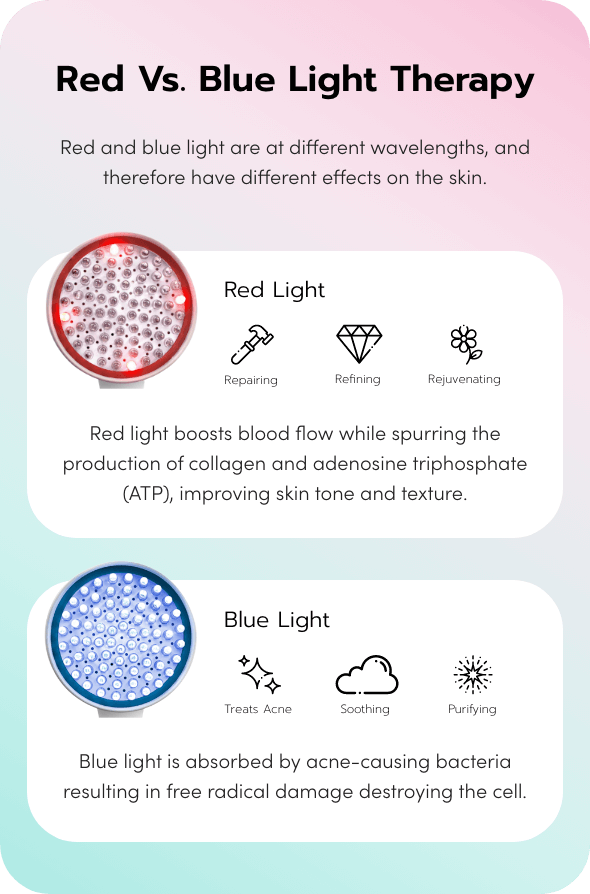
They're not competitors — they're different tools. Blue light (around 415 nm) works at the surface, where acne bacteria live: it kills bacteria and calms oil. Red light (around 630–660 nm) travels deeper, where it stimulates collagen, boosts circulation and settles inflammation — that's why red is the anti-aging and recovery wavelength while blue is the clear-skin wavelength. A simple router: breakouts, oily skin and clogged pores want blue; fine lines, dullness and lingering post-acne redness want red.
And if you're asking the most-searched question — red or blue light for acne? — the honest answer is often both: blue kills the bacteria driving the breakout while red calms the inflammation and helps the mark heal faster. That's exactly why we offer each as its own add-on and frequently pair them. You can read more about red light on our red light therapy add-on page.
Perfect for Sensitive Skin
This gentle treatment is ideal for all skin types, especially sensitive skin, offering a safe alternative to harsh acne treatments. It minimizes irritation while delivering powerful results, making it a top choice for San Diego clients seeking clearer, healthier skin.
Add the Lux Blue Light Therapy to any facial. Select the add-on option when booking your appointment. Schedule now or text us to learn more!
Blue Light at Home vs. Professional
Home blue light masks use the same wavelength at a fraction of the power — built for daily use over months, not minutes. A good one is honest maintenance between treatments; a cheap one that doesn't publish its wavelength or output is why people quit. We're hand-testing the home devices we'd put our name behind and will list our picks right here. For scale: our in-studio panel delivers in five minutes what a home mask accumulates over weeks — home suppresses, professional knocks down.
If you're local, you don't need to buy anything: blue light is a five-minute add-on to any facial at our Hillcrest studio — select it when booking. For breakouts on the back, shoulders or chest, it's built into our Back Acne Treatment, and stubborn facial acne pairs it with our Advanced Acne Facial. Daily 9:00 AM – 9:30 PM, at 1450 Washington Street.
Frequently Asked Questions
-
It kills acne-causing bacteria with 415nm light. The bacteria carry light-sensitive molecules called porphyrins; blue light activates them and the bacteria are destroyed from within — reducing current breakouts and preventing new ones.
-
Yes — it's non-invasive, chemical-free and gentle, with minimal side effects, which makes it one of the few acne treatments we recommend without hesitation for sensitive skin.
-
Five minutes. Our panel delivers its full 6,000-joule dose in that window — and more time under the light isn't better; exceeding the ideal exposure reduces effectiveness, so five minutes is the point.
-
On the face it targets the T-zone's oil and bacteria — calming active breakouts, reducing how often new ones form, and settling the shine of oily skin. It won't resurface texture or fade scars; pair it with a facial or peel for that.
-
Yes, indirectly but reliably — blue light dials down sebum production, and less oil means fewer clogged pores over time. Pairing it with extractions in the same appointment handles the blackheads that already exist.
-
A single add-on calms an active breakout; visible change in overall clarity typically builds over a series — one add-on with each facial, or weekly during a flare. Consistency beats intensity.
-
Blue light is non-UV — it doesn't tan or burn. Occasional mild, short-lived redness or dryness is the extent of it. Your eyes are shielded during treatment, and if you take medications that increase light sensitivity, tell your esthetician first.