

Red Light Therapy, Explained
Red Light Therapy - Clinical Strength
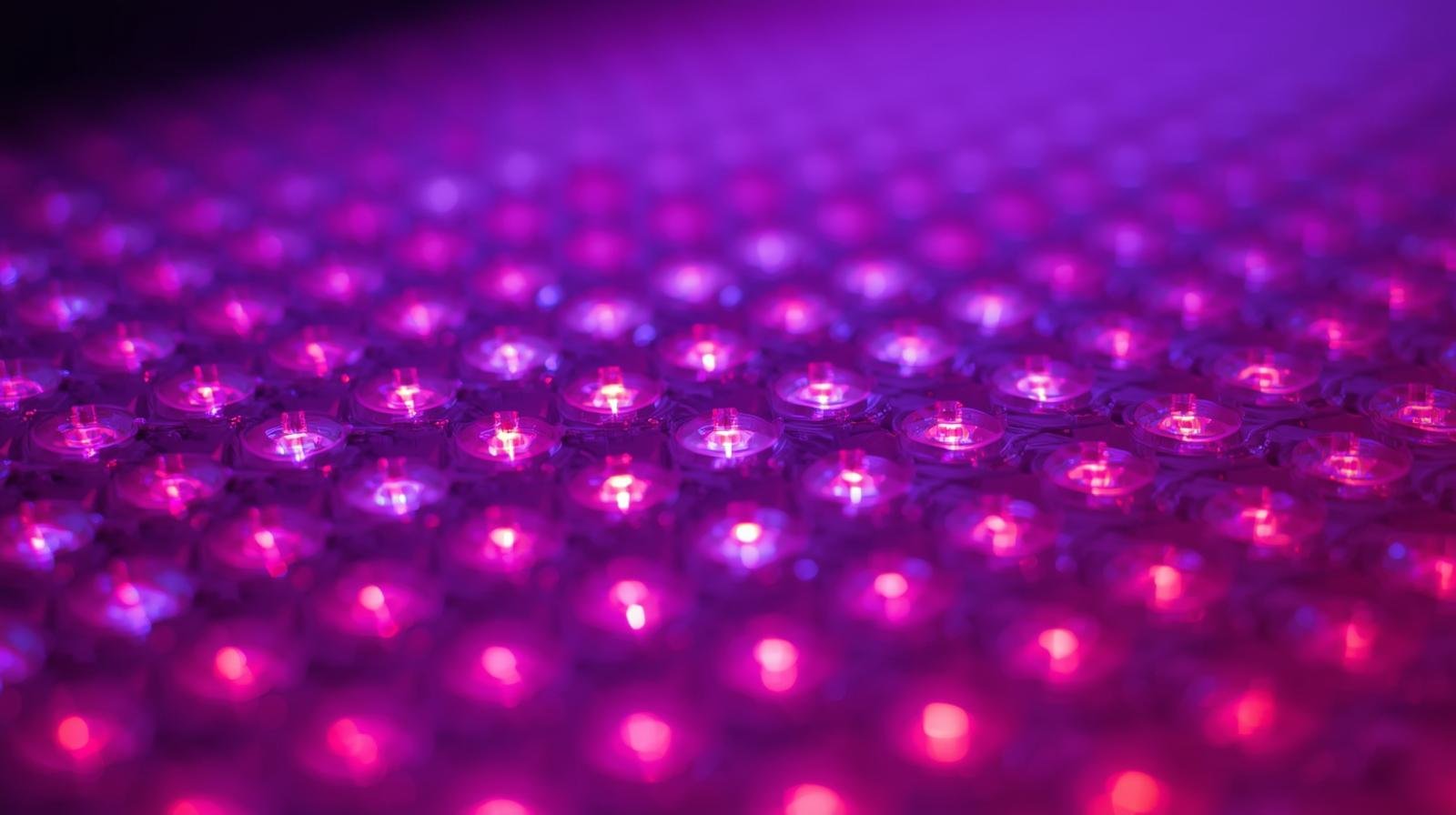
Our Red Light Therapy facial enhancement has thousands of deep Red LED’s; which is the most studied for aging. Our panel emits 6K joules, giving you a full 1 hour treatment in only 5 minutes. You can add this to the end of any facial or back treatment.
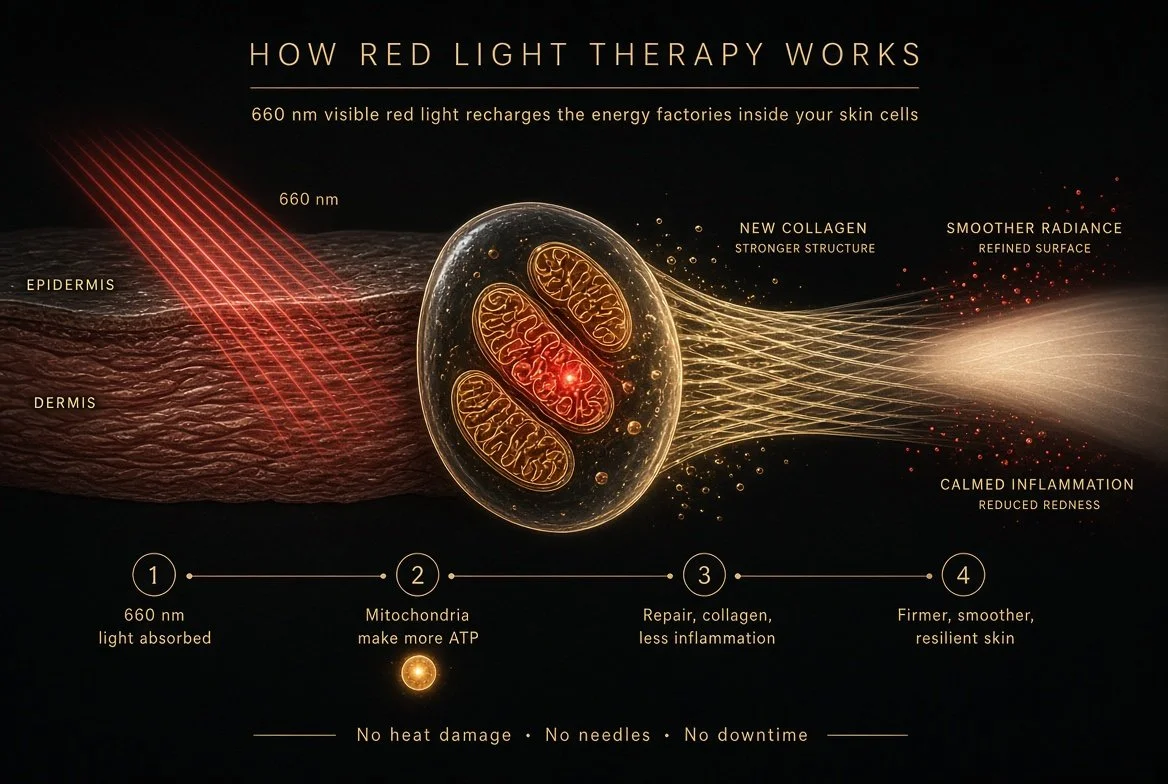
Red light therapy uses visible red light — typically around 660 nanometres — to recharge your skin's cells. The light is absorbed by the mitochondria, the energy factories inside each cell, which respond by producing more ATP: the fuel cells use to repair, build collagen, and calm inflammation. The result builds gradually — firmer, smoother, more resilient skin — with no heat damage, no needles and no downtime. Here's exactly how it works, what it can and can't do, and how to get it — at home or professionally in San Diego.
What Does Red Light Therapy Do?
Skin ages partly because its cells slow down — fibroblasts, the cells that manufacture collagen and elastin, simply produce less with every decade. Red light at 660 nanometres reaches those cells and is absorbed by an enzyme in their mitochondria, nudging energy production back up. More cellular energy means more collagen built, better circulation, and less inflammation — which shows up on the surface as softened fine lines, improved texture and tone, faster recovery after treatments, and that lit-from-within look that's hard to fake with makeup.
The honest part: red light is a builder, not an eraser. It won't fill deep wrinkles or replace resurfacing — its results accumulate over consistent sessions, which is why it's studied more than any other wavelength for skin aging and why it works best woven into a regular facial routine rather than done once. It's also one of the gentlest treatments that exists: no UV, no heat damage, safe for every skin tone, and comfortable enough that most clients simply doze under the panel.
Red Light Therapy Benefits
Increases Collagen and Elastin: Stimulates ATP to build collagen and elastin, reducing fine lines and wrinkles.
Reduces Redness and Inflammation: Soothes skin, ideal for sensitive or post-treatment care.
Improves Texture and Tone: Enhances smoothness and evens skin tone for a youthful glow.
Accelerates Healing: Speeds recovery from aggressive treatments like peels or extractions.
Rejuvenates Skin: Restores a radiant, healthy complexion with a natural boost.
One routing note: red light is for aging, healing and inflammation. If breakouts and oily skin are your battle, blue light is the wavelength for that — we've broken down the difference on its page.
Red Light at Home vs. Professional
Home red light panels and masks are the real thing at lower power — built for near-daily use over months, and a genuinely good habit between appointments. The catch is the market: red light is the most crowded corner of home skincare devices, and many panels don't publish wavelength or output at all. We're hand-testing the home panels we'd actually stand behind and will list our picks right here. For scale: our in-studio panel delivers 6,000 joules across thousands of deep-red LEDs in five minutes — the dose a home mask spreads across weeks. The two work best together: home maintains, professional builds.
Red Light Therapy in San Diego
If you're local, the fastest way to try it is at our Hillcrest studio: red light is a five-minute add-on to any facial or back treatment — select it when booking. It's already built into our Anti-Aging Rejuvenation Facial, where it follows the TCA peel to calm the skin and lock in the glow, and it pairs beautifully with the Éminence Organic Facial as the finishing step. Daily 9:00 AM – 9:30 PM, at 1450 Washington Street.
Frequently Asked Questions
-
It recharges the cells that build your skin: more collagen and elastin production, better circulation, and less inflammation. On the surface that shows up as softened fine lines, smoother texture, a more even tone, and a healthy glow that builds with consistent sessions.
-
It's the most-studied wavelength in light therapy for skin aging, with consistent evidence for collagen stimulation and inflammation reduction. The honest caveat: results are gradual and depend on consistency — it's a builder, not an instant fix, which is exactly why we offer it as a repeatable add-on rather than a one-time treatment.
-
Professionally, adding it to each facial — every few weeks — keeps the collagen stimulus regular. Home devices are designed to fill the gaps with short near-daily sessions. The combination beats either alone: home maintains the signal, the studio panel delivers the strong dose.
-
Yes, for fine lines and early wrinkles — by rebuilding the collagen beneath them, which takes weeks to months of regular exposure. Deep-set wrinkles need more than light; that's resurfacing territory, and we'll tell you honestly which yours are.
-
By concern: aging, dullness, redness and post-treatment healing are red light's work; active breakouts and oily skin are blue light's. They pair well — many clients run blue for the breakout and red for the healing. Each has its own page here if you want the full comparison.
-
It's among the gentlest treatments in skincare — no UV, no tanning, no heat damage, safe for every skin tone, with at most brief mild warmth or redness. Your eyes are shielded for comfort, and if you take medications that increase light sensitivity, mention it to your esthetician first.
-
That's the smartest time to use it. Red light accelerates recovery and calms inflammation, so adding it after a peel, dermaplaning or extractions helps the skin settle faster and amplifies the glow — it's why it's the built-in final step of our Anti-Aging Rejuvenation Facial.